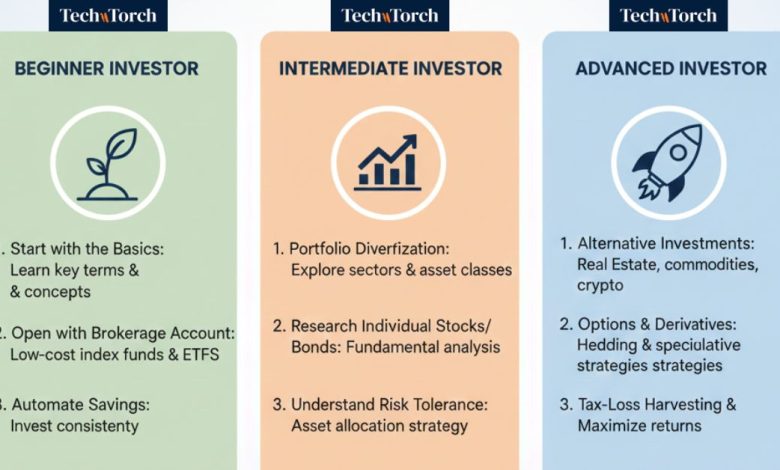
Investing can feel confusing at first, especially when markets move fast and advice comes from every direction. This is where Investiit.com tips become valuable for beginners and experienced investors alike.A journey of a wise investment begins with a perfect understanding, a few attainable goals, and uncomplicated methods that are really effective over time. Rather than following the trend or trying to earn quick money, Investiit.com advice is aimed at creating wealth for the future through discipline, strategy, and waiting.
When you know the process of money growth and the concept of risk, then investing will not be so stressful and it will be more like a rewarding experience. With proper support, even modest and consistent investments can result in significant financial gains. That is the reason why it is very beneficial to learn and put into practice the tips from Investiit.com as they are designed to make your investments not only profitable but also easy to understand and manage.
Introduction to Smart Investing with Investiit.com
Smart investing means making choices that match your income, goals, and comfort level. It does not mean predicting the market or chasing fast profits. Investiit.com Tips focus on building understanding first, so beginners know why they invest, not just where they invest. This approach helps people stay calm during market ups and downs.
For beginners, investing matters because inflation slowly reduces the value of savings. Learning stock market investing basics allows your money to grow instead of shrink over time. Investiit.com helps by simplifying concepts and encouraging patience. When investing becomes clear, confidence replaces fear.
Build a Strong Financial Foundation Before Investing
The investment panic becomes even more difficult to make when the investments are backed by a strong financial base. Selling during the market downturn is typical of the unstable investor. It is because of this that debt management before investing is prioritized. High-interest debt can easily outpace the growth of most investments, thus making it even harder to get on the right path. The first step to investing is to clear all high-interest debt and then create an emergency fund.
Most financial advisors will tell you that the amount you should save up in cash as a cushion for emergencies should be equal to three to six times your living expenses. This underlines the importance of the emergency fund since the unforeseen should never be a reason to liquidate investments. Stability is what enables the long-term plans to function properly.
Also read about Gocryptobet.com
Understanding Investment Basics Every Beginner Must Know
Understanding how investments work removes fear. Learning stocks bonds and ETFs explained in simple terms helps you see where money goes and how it grows. Stocks represent ownership, bonds provide interest, and funds spread risk across many assets.
Another key idea is compound interest investing, which rewards time and consistency. When earnings generate more earnings, growth accelerates. This principle explains why starting early matters more than investing large amounts later. These basics support a strong long-term investing strategy.
Risk Management and Knowing Your Risk Tolerance
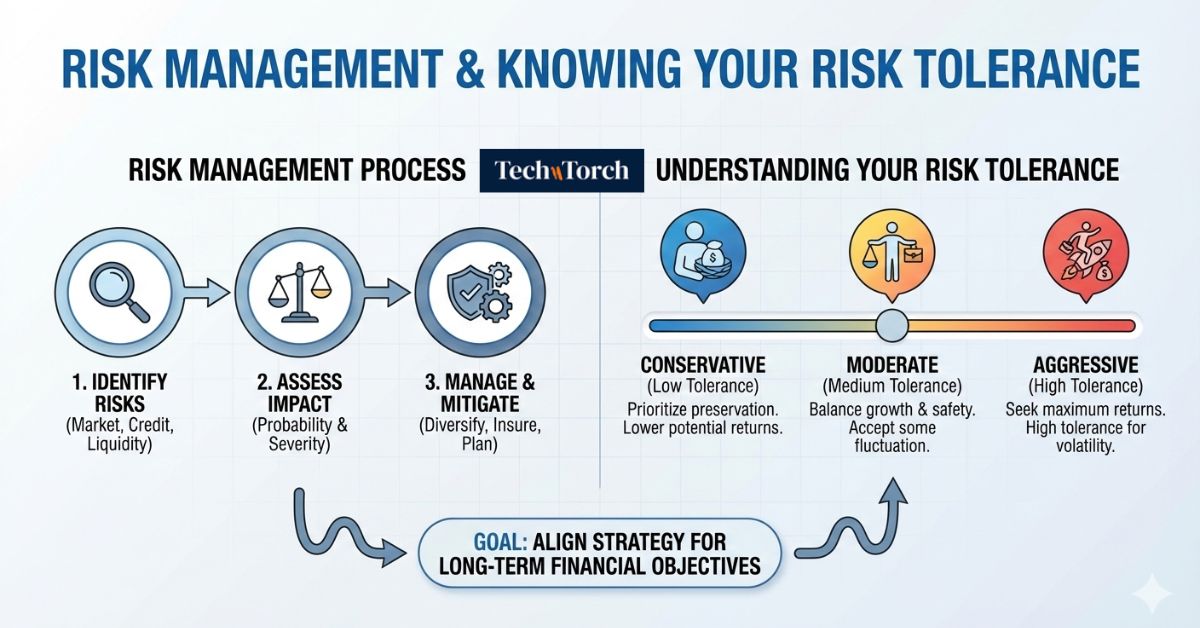
Risk is an inherent part of every investment, but smart investors are very careful in their management of it. The first step in risk management is the understanding of the investor’s risk tolerance, which is basically the knowledge of how much loss one can bear both emotionally and financially. Factors such as age, income security, and aspirations will all play a part in this.
Risk and return are connected. Higher returns usually come with higher risk. Investors who accept this reality avoid panic. Proper planning helps achieve realistic investment returns instead of unrealistic promises.
Investiit.com Tips for Stock Market Investing
Stock investing works best with patience and planning. Investiit.com Tips encourage focusing on quality businesses instead of daily price changes. This mindset helps beginners avoid emotional decisions and unnecessary trades.
Diversification plays a key role in stocks. Owning companies from different sectors creates a diversified investment portfolio. Over time, reinvesting dividends and staying consistent supports long-term wealth creation.
Long-Term Investing vs Short-Term Trading
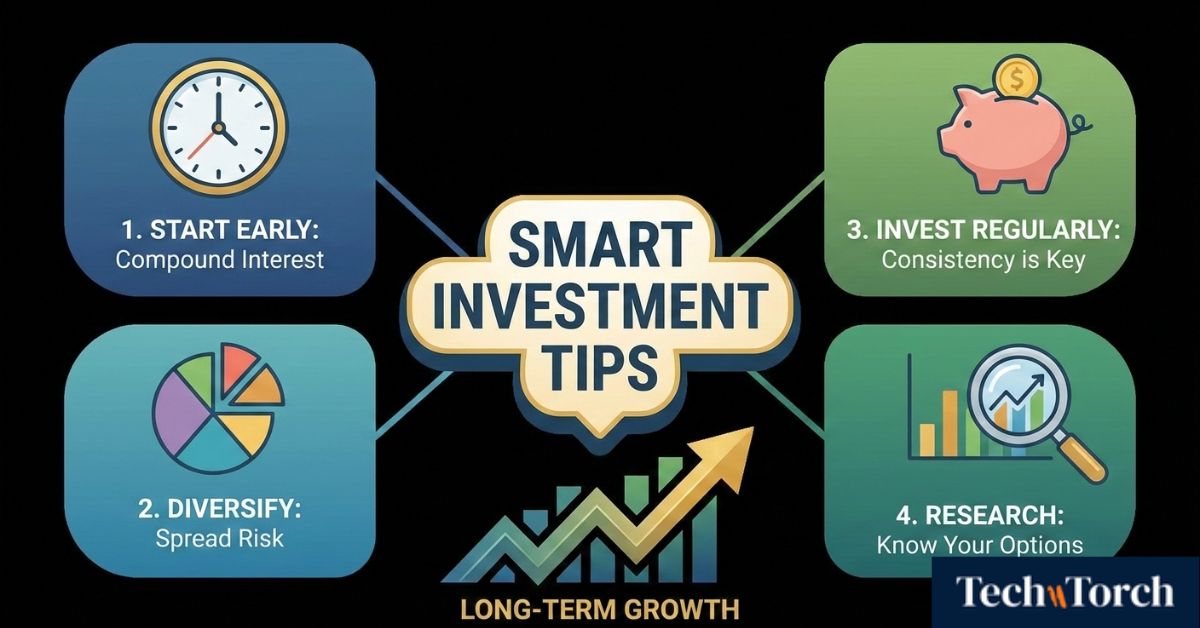
Long-term investing is about growth over a period of several years. At the same time, short-term trading is about price changes that happen within days or even hours. It requires a constant presence and emotional control, which is hard for a novice to master. The less-active approach in investing is the one that reduces stress and errors.
It does not depend on the timing of the market, which is usually the case with the opposite approach and consequently, it is always the one that suffers returns the most. The majority of the investors who are successful do it by being invested, and not by making right the predictions of short-term movements.
Importance of Diversification in Portfolio Building
Diversification is a risk management technique that involves spreading one’s money over various assets. Rather than depending on one investment alone, money is divided up among different categories such as shares, fixed-income securities, and others. In this way, the approach to risk reduction through diversification is facilitated.
Rebalancing of the portfolio takes place at regular intervals to ensure that the investments remain in line with the objectives. It also avoids dominance of one specific asset in the overall portfolio, allowing for equal distribution during shifts in the market.
Exploring Different Investment Options

Retirement Planning and Tax-Advantaged Investments
Retirement planning done early brings in freedom later. Long-term income is secured through retirement investments. The use of tax-advantaged retirement accounts makes the money grow faster by tax reduction. Knowing the advantages of 401k and IRA is a must.
The majority of companies give employer matching contributions which immediately increase the amount saved. These accounts allow tax-deferred investment growth, and it is a matter of income expectations in the future for the choice between Roth vs traditional retirement accounts.
Common Investment Mistakes Beginners Should Avoid
Many investors lose money due to behavior rather than lack of knowledge. Avoiding beginner investment mistakes begins with controlling emotions. Emotional trading risks often lead to buying high and selling low.
Another mistake is reacting to news or chasing trends. Strong investment discipline helps investors stay focused on long-term goals instead of short-term noise.
Investiit.com Advanced Tools and Market Analysis Tips
Powerful techniques available now make it easier for investors to interpret trends and performance. The basic analysis which looks into the performance of the company is called fundamental analysis, while technical analysis studies the price trends.
These devices are to be used as a support to the decisions rather than a discipline replacement. The quarterly portfolio review offers a chance for changes without being too sensitive. Keeping an eye on the fundamentals instead of the market noise ensures that the decisions are reasonable and are in harmony with the long-term objectives.
Comparison Table – Investment Options Risk vs Return
| Investment Type | Risk Level | Expected Return | Best For |
| Stocks | High | High | Long-term growth |
| Bonds | Low | Moderate | Stability |
| Index Funds | Medium | Moderate to High | Beginners |
| Real Estate | Medium | Moderate | Long-term planning |
| Cryptocurrency | Very High | Uncertain | Speculation |
This comparison shows how different investments balance risk and reward, helping investors choose wisely.
Final Thoughts – Building Wealth with Investiit.com Tips
Wealth accumulation is a gradual process but it has its rewards through patience, clarity, and systems that filter out emotions. Investiit.com Tips suggest monthly investing combined with the dollar-cost averaging strategy as a method of slowly but surely achieving the goal.
With the help of these methods, stress will be less and the result will be better. The root of investing success is to pay no attention to the market, to be undisciplined, and to have very low expectations in terms of profits. Time and consistency make the investment a great financial tool for security and even independence.
FAQs
Can I make ₹500 every day from the stock market?
There is a possibility of earning ₹500 daily, but it demands a lot of experience, a good strategy, and it is quite risky.
What is the 7-5-3-1 rule?
The rule of 7-5-3-1 is a guideline for trading to help with risk management and the size of positions, however, the specifics change with each strategy.
How to earn ₹1000 per day in the stock market?
Earning ₹1000 daily is possible with skill and capital, but losses are equally likely without careful planning.
What is the 7-3-2 rule?
The 7-3-2 rule is a risk or allocation method in trading to balance gains and losses depending on approach.
How to earn $1000 a month from investing?
Consistently investing, taking advantage of compound growth, and maintaining a diversified long-term portfolio are the ways to generate a monthly income of $1000.
How should I invest ₹1000 each month?
Allocating ₹1000 every month to mutual funds, index funds, or ETFs is a good long-term strategy with gradual wealth building through investments.